I really liked the session and learned a lot about myself throughout this experience. I learned a lot of practical skills and strategies that I can use for myself or even for my clients in between and during sessions.

~ Exclusive of the Prerequisite of Level 1 Certification Program ~
The Portland Institute is delighted to introduce our Certification Program in Meaning-Focused Grief Therapy (MFGT), a specialized training initiative designed to help professionals and practitioners explore the intricate interplay between grief and a crisis of meaning in the wake of significant loss.
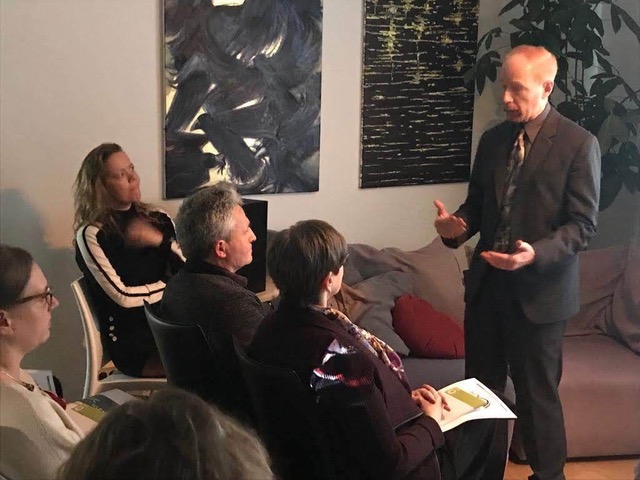
This advanced certification draws on contemporary therapeutic approaches that emphasize the importance of helping survivors not only navigate the emotional complexities of grief but also reconstruct a sense of purpose and meaning in their lives. Led by core PI faculty and select international experts in grief therapy, this program offers a comprehensive exploration of theoretical frameworks, evidence-based interventions, and creative techniques to guide individuals through the transformative process of meaning reconstruction.
Learners will engage in dynamic and interactive sessions, incorporating case studies, experiential practice, and collaborative discussions to deepen their understanding of the nuanced nature of grief and its profound impact on an individual's sense of self and purpose in life. This program also addresses cultural and spiritual dimensions of meaning reconstruction, recognizing the diverse ways individuals find solace and meaning in the aftermath of loss.
Whether you are an experienced therapist seeking to specialize in grief therapy or a practitioner looking to integrate innovative approaches into your practice, this certification program offers a rich toolbox of concepts and clinical practices to help mourners rebuild life after loss.
Note: Level 2 Certification is open only to licensed or registered professionals in their respective disciplines, such as psychology, social work, counseling, medicine, nursing, marriage and family therapy, art therapy and the expressive arts. However, learners beyond these licensed disciplines (e.g., life coaches, child life specialists, chaplains, death doulas) may enrol in any courses they wish without pursuing certification.
CLICK HERE for More Details.
Note: All the above components can be taken in either online or onsite versions, in any combination and any sequence the learner desires.
Note: All licensed or registered mental health professionals completing the above required components will receive Certification in Meaning Focused Grief Therapy (MFGT) and, at their discretion, may be listed on the Portland Institute website as part of our Global Provider Network.
Becoming proficient in facilitating clients’ meaning making about their losses and their changed lives requires a broad and deep grounding in models and methods of grief therapy. To foster this, Orientation Lessons address contemporary therapeutic approaches and clinical challenges that build on the basic framework of the Tripartite Model of Meaning Reconstruction in Loss included in the Level 1 Certification. Learners are required to complete at least four Orientation Lessons for certification.
These Orientation Lessons cover the following essential areas:
– Attachment and emotion regulation
– Cultural diversity in loss and grief
– Faith and posttraumatic growth in traumatic loss
– Pre-death loss in end-of-life care
– Terminal illness and the quest for meaning
Each lesson is focused on specific therapy tools or techniques that may be delivered through onsite workshops, live webinars or online recordings. Adopting an experiential learning model, both onsite workshops and live webinars actively engage learners in applying models and methods to actual clinical cases as well as their own experience. In recorded formats, learners are encouraged to use the Responsive Journal to strengthen the transfer of methods to practical contexts. To ensure that they have a well-stocked clinical toolkit, learners are required to complete at least six Techniques Lessons for certification.
Most case studies consist of video-recorded clinical sessions with a close process analysis to reveal the therapist’s moment-to-moment reading of the client’s need and readiness to engage in specific meaning reconstruction tasks. Learners are required to complete at least two Case Studies through live webinars, online recordings or onsite workshops for certification.
Following faculty presentation of clear guidelines for the use of one or more Meaning Reconstruction tools in therapy, participants in onsite and live training form small groups and role-play clinical interactions or apply the tools to their own experience to assist in bridging theory and practice, as faculty provide support and feedback. In recorded formats, learners are encouraged to use the Responsive Journal to strengthen the transfer of methods to practical contexts. Learners are required to complete at least four Practicum Lessons for certification.
To personalize training and address learner’s unique questions about course content, clinical challenges or their career development, they are required to participate in at least three 1-hour individual Mentoring Sessions with the Portland Institute faculty member(s) of their choice. These sessions may be conducted face-to-face, or via phone or videoconference.
Following the completion of all the above components, learners need to submit one 50-minute video recording of an application of meaning reconstruction in grief therapy in an actual session or in role play, along with a transcript of the session. The session is then evaluated for demonstration of competency in working with grieving clients from a meaning-making perspective. Learners then either receive extensive written feedback or schedule a 1-hour feedback session with the Portland Institute faculty of their choice.
By no means. Although PI occasionally organizes training events in Oregon, it also offers In-Person Training in collaboration with partner organizations throughout the US and the world, so you can choose any training events in the location(s) that work for you. And of course, our extensive menu of Recorded Training lessons is available anywhere, at any time.
Absolutely. You can participate in any PI training and/or purchase any recorded lessons simply as a professional continuing education experience, without pursuing certification.
Yes. Payment of the Enrollment Fee, like a registration fee at a university, is required to establish you as a Certification learner before you start accruing your training hours toward certification. If you decide to pursue multiple Certification tracks sequentially or simultaneously, the Enrollment Fee is required separately for each, just as how you enrol in different degree programs in a university.
No. You have the full liberty to decide how fast or slow you want to proceed with this learning journey and you can go according to your preferred pace.
No. You can take any lesson you wish, in any order that fits your needs. However, for those pursuing Certification, starting from Level 1 lessons is usually encouraged before taking lessons for Level 2 specialty certification programs. Many learners also find that Level 2 Orientation lessons are a logical and helpful place to begin these advanced certification tracks, although the exact path chosen can be highly individualized, typically with various elective options.
No. You don’t necessarily need to wait until you complete all the Level 1 lessons before proceeding with any of the Level 2 lessons, though many learners found that it’s helpful to start with Level 1 lessons as they serve as foundational courses for the subsequent lessons.
No, there is no expiry date, so you may watch the recordings anytime you like after your purchase as long as you log in with your registered email address. Once you complete watching the entire video, the system will mark it as “complete.” You may also rewatch these recordings for as many times as you like subsequently.
That depends on your preferences and priorities. Because In-Person Training workshops and retreats are offered at numerous locations throughout the world annually, and Recorded Training lessons can be completed at your own pace, Level 1 Certification (24 hours of training) theoretically could be completed in as little as one week, though most learners pursue it across a period of some months. Some In-Person Training series offer multi-day workshops that deliver several of the necessary components of Level 2 Certification over a period of 3-5 days. While some learners complete Level 2 (approximately 55 hours of training) in a few months, most learners choose to pursue specialized certification at a more leisurely pace taking a year or more that allows them to apply their learning into practice and enhance their theoretical understanding and mastery of skills before they complete the final step of Session Evaluation for certification.
Certainly. Many learners find it valuable to add more lessons in areas of their interest to consolidate their skills before they conclude their selected certification program, and many have pursued Level 2 Certification in more than one specialty. PI also welcomes back many in our global learning community in our annual residential Learning Retreats, which always include new and cutting edge keynote presentations and practice-oriented workshops.
Many of our learners also use Mentoring sessions as a form of ongoing consultation for their practice, so they sign up for as many rounds as they need (each registration is inclusive of three 1-hour mentoring sessions).
That depends. Meaning Reconstruction is seminal to adaptation following all sorts of loss, be it death or non-death related, visible or invisible, evident or ambiguous. So advanced learners in MFGT, FFGT and AAGT Certification Programs can choose to work with any sort of loss. However, GTTL Session Evaluations typically focus on bereavement while those pursuing NDL certification would primarily work with non-death losses, such as illness, relationship loss, dementia in a family member, difficulties in migration or with job loss—all of which may occasion real grief. When in doubt, check with your evaluating faculty for this assignment before arranging your recording of a session for submission.
No problem with respect to a client. In replacement of a real client from your actual practice, you may engage someone from your personal circles (e.g. colleagues, relatives or friends) who would be wiling to step in as a “client” sharing a personal loss experience that is relevant to your certification track and would allow you to record the conversation. This still allows you to demonstrate your skills in conducting grief therapy using Meaning Reconstruction framework.
Most learners nowadays simply conduct and record the session in gallery mode in Zoom, Google Meet, Riverside, or a similar platform, most of which can automatically produce a transcription of the session for evaluation. However, some prefer to record in-person sessions on their phone, ensuring good sound pick-up through the use of lapel microphones for each participant, and with both participants on the screen.
No, there is currently no legal recognition of grief therapy as a profession in the USA or abroad. Practitioners must be appropriately trained and credentialed in their relevant disciplines (e.g. psychology, counseling, social work, nursing, medicine) for the services they provide. However, the respective Certification Programs can function as a valuable credential on your website or listing to testify to your unique skills and experience, just as certification does in other areas (e.g. trauma work, internal family systems).
Yes. Life coaches, chaplains, nurses, bereavement coordinators, death doulas and many other professionals not holding a license in a mental health field can participate in any form of In-Person and Online Training they wish and also be certified at Level 1, as can graduate students who are completing their degree. However, their certification will be in Meaning-Focused Bereavement Support, to make clear that they are not credentialled as therapists, as the latter is a legal credential regulated by states or national governments, and not by educational institutions. Learners with licensure or registration in their respective mental health fields can be certified in Level 1 Meaning-Focused Grief Therapy, as well as in all Level 2 Certification tracks.
As PI is an approved provider of professional continuing education by both the American Psychological Association (APA) and the Association of Social Work Boards (ASWB) – Approved Continuing Education (ACE), all In-Person Training and Learning Retreats organized by PI carry the option of purchasing CE credits for the majority of providers in those disciplines. Very often, these CE credits are also recognized by a number of other disciplines, given the stringent quality control that these approvals imply. However, because CE is regulated independently by state licensing boards for different disciplines, it is always wise to check with those boards directly to ensure that a particular CE event will be recognized in your jurisdiction of practice.
If you want to get CE credits with APA and/or ASWB-ACE, be sure to select the corresponding registration option(s) for Live Online Training sessions and/or the relevant version of the Recorded Training lessons that includes the type of credits you wish. For In-Person Training events, you will be prompted to indicate if you want CE Credits in the registration form.
Note that there is a modest Credit Fee of $25 to cover the cost of these CE credits through Live Online Training sessions and/or Recorded Training lessons. For In-Person Training events, the CE Fee may range between $50-125 depending on the number of days involved. Just see pages devoted to the specific trainings on the PI site for the relevant details.
For In-Person Training events, you will be required to sign in and out of the session(s) you attend. A CE Certificate will be issued to you after the event based on your signatures. Full attendance of the entire session is required in order to receive CE credits. No partial credit is awarded.
For Live Online and Recorded Training, you will be required to complete a CE Quiz after the live session or watching the entire video. An overall score of 75% or higher within three attempts is required to obtain CE credits. The CE Certificate will then be issued to you.
Note that there is a modest Credit Fee of $25 to cover the cost of these CE credits through Live Online Training sessions and/or Recorded Training lessons. For In-Person Training events, the CE Fee may range between $50-125 depending on the number of days involved. Just see pages devoted to the specific trainings on the PI site for the relevant details.
I really liked the session and learned a lot about myself throughout this experience. I learned a lot of practical skills and strategies that I can use for myself or even for my clients in between and during sessions.
It was great learning and reinforcement of the value of making meaning for one’s posttraumatic growth. I really like the way you model validation and reframing in your case studies. Meeting a client where they are and then facilitating with one of interventions you’ve given, in their moment of readiness. Teaching and modeling this is very helpful to watch unfold.
I appreciate so much how Dr. Neimeyer and Dr. Ng explain, present and model the use of the techniques throughout the workshop. Both Drs. Neimeyer and Ng are top in their field. I’ve had the pleasure of meeting so many other faculty at the retreat–all of whom are experts in this field. I look forward to participating in the certificate program.
I enjoyed the whole seminar – very informative and well organized.
Deeply moving, well-supported with theory and research, extremely useful and inspiring. The slides were beautiful and engrossing. I’m sure we were all looking closely and deeply, in a parallel process with the screen and within ourselves.
I was very moved by the instructor sharing her personal experience as well as her art. Having her client present to share her loss and her art was also powerful and impactful. The learning from this class was deep and sustaining.
I truly loved everything. I particularly enjoyed the combinations of lecture and experientials.
The entire retreat was amazing. It was perfectly paced for learning and creating. It was both personally powerful and professionally. I loved the Lunch and Learn.
I am extremely impressed by this conference. The topics, the presenters. It was well worth the time and money.
Thank you for a beautiful retreat. I was moved to tears several times and it has set me on a course of deeper discovery. The presenters were all top notch, knowlegeable, and engaging. The activities allowed us to discover many things about ourselves and sharing the experience with others was invaluable. Those interactions will stay with me for a long time.
Honored & grateful for the PI team. Such a wealth of knowledge, expertise & compassion for humanity & healing suffering. I cannot wait to engage further with the PI trainings!
This is my first experience with PI and now I have found my go-to place for ongoing learning, mentoring & connection! I’m so excited for more!
Well done! Appropriate breadth & nice depth of skills covered. Appreciate the experiential approach. Knowledgeable & supportive faculty. Looking forward to doing more with PI in the future.
PI’s Grief Therapy Learning Retreat offered a safe holding space for grief professionals to gather in a beautiful setting & learn with prominent leaders in the field of thanatology. Professional yet warm, rigorous yet invigorating — I’m leaving with a sense of renewal to meeting clients where they are.
The retreat, the attendees, the faculty, the leaders and the offerings (learning opportunities) were really off-the-charts amazing. Thank you for creating an event that has been transformational for me.