Collage:
Reassembling Life after Suicide

This training is intended for professionals who are seeking creative and imaginative skill development in their bereavement interventions with suicide loss survivors.  As no artistic talent is presumed on the part of the client or therapist, this course will be helpful for a broad range of mental health professionals, pastoral counselors and nurses, as well as expressive arts therapists.

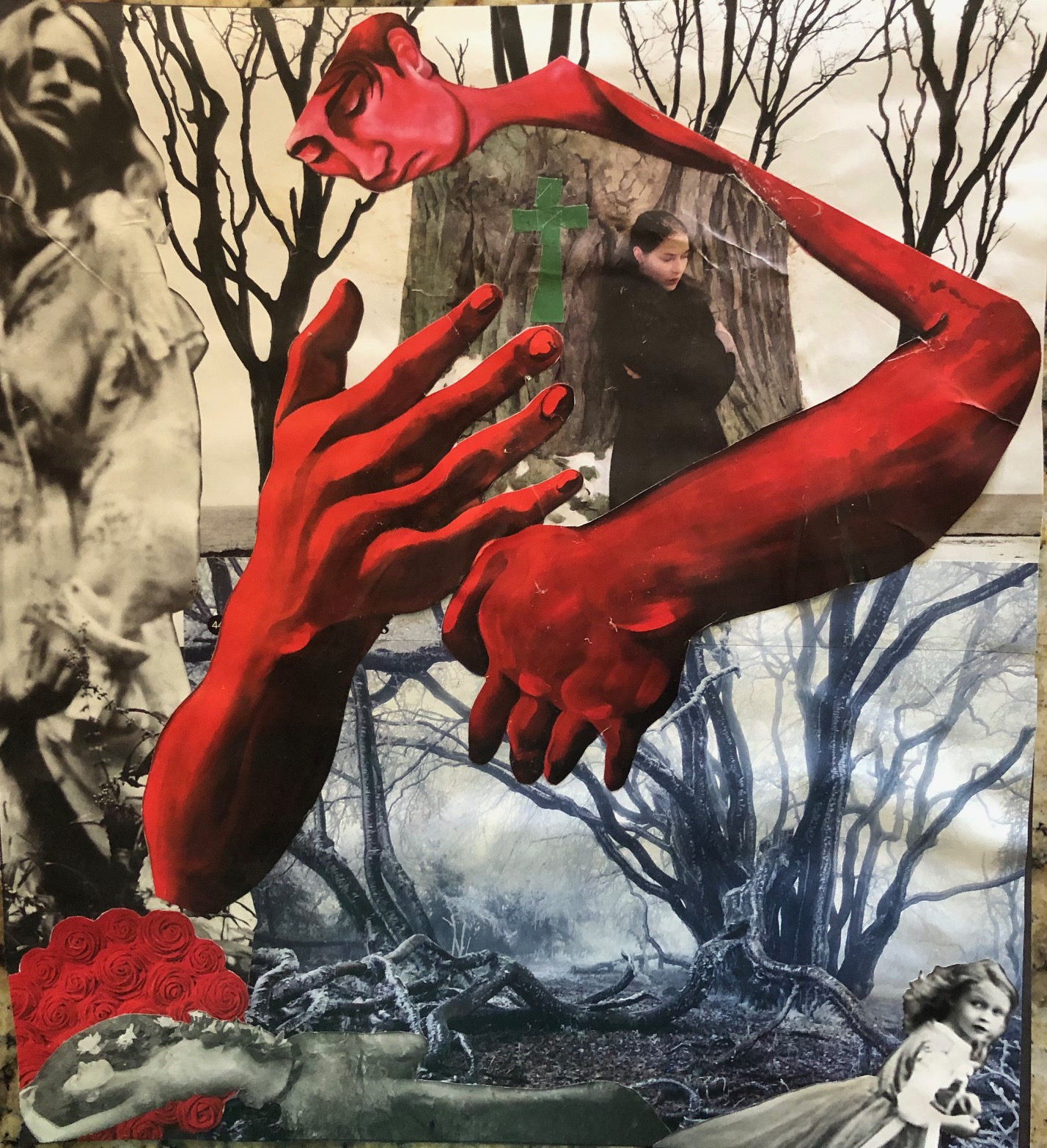
This didactic, experiential workshop introduces collage as a medium for reassembling life after suicide loss. Collage is a therapy of the imagination, and of particular value in helping people transform and re-envision their lives.  Visual artworks are created from a variety of art materials with a focus on magazine words, images and ephemera, which are cut, altered, arranged and attached to paper or cardboard.  The unspeakable, fragmented elements of trauma arising from the suicide and its associated non-death losses are grounded in the experience of selecting, sorting, tearing, snipping, placing, taping and gluing imagery together.The transformation of bits and pieces into new forms is empowering and freeing, and allows for new embodied discoveries.

Art therapy based theory and practices are woven together with grief and bereavement theory.  Evidence suggests that the difficult work of meaning reconstruction is a central part of the healing process for suicide loss survivors, who experience a shattering of their assumptive world.  The essential elements of the creative process, deconstruction and reconstruction in service to healing, lend themselves to Neimeyer’s model of Meaning Reconstruction, with an exploration of the event story, back story and personal story as well as the clinical tenets of bracing, facing and pacing.  Worden’s Task Model of Bereavement and Rynearson’s Restorative Retelling Model are further explored through traumatic loss case studies that include collage images created over a 20-year period by the presenting faculty in response to the suicide of her seventeen-year-old daughter.

Collage is a creative act of inquiry, a means to intertwined and layered knowledge.  Constructing images promotes ways of knowing, shaping and storying grief and its impact on our assumptive world, so the experience does not remain senseless, silenced, unseen, immovable or untouchable.  Learners will create their own collages in response to a death or non-death in their lives and explore an internal landscape non-verbally as a way to piece together personal or professional experiences of loss. We will leave with an experience of collage as a springboard to verbal inquiry, the place where abstract ideas come to life and yield sudden insights.

Note: This 3-hour CE module focuses on topics related to psychological practice, education, or research other than application of psychological assessment and/or intervention methods that are supported by contemporary scholarship grounded in established research procedures.

LEARNING OBJECTIVES

  • Apply Worden’s Task Model to collage and discuss those tasks as evidenced in one of the case studies;
  • Analyze the collage process and product through a Meaning Reconstruction focus on the event, back and personal story narratives, as evidenced in one of the case studies;
  • Describe how the collage process facilitates engagement with the three focal questions implicit in suicide bereavement and grounded in Rynearson’s Restorative Retelling: How did it happen, Who am I now, and What is my relationship to the deceased? and
  • Summarize the tenets of art therapy collage with suicide loss survivors, anchored in Neimeyer’s clinical framework of bracing, pacing and facing.

Earn 3 Continuing Education (CE) Credits

Portland Institute for Loss and Transition is approved by the American Psychological Association to sponsor continuing education for psychologists.  Portland Institute for Loss and Transition maintains responsibility for this program and its content.

Portland Institute for Loss and Transition, [Provider number 1954], is approved to offer social work continuing education by the Association of Social Work Boards (ASWB) Approved Continuing Education (ACE) program.  Organizations, not individual courses, are approved as ACE providers.  State and provincial regulatory boards have the final authority to determine whether an individual course may be accepted for continuing education credit.  Portland Institute for Loss and Transition maintains responsibility for this course.  ACE provider approval period: 09/09/2025-09/09/2028.

Earn 1 Credit for Techniques Module toward
​Certification in Art-Assisted Grief Therapy
or Certification in Grief Therapy for Traumatic Loss
Offered by the Portland Institute.


PROGRAM SCHEDULE

This program contains the following video segments:

  • Artful Grief: Expressive and Conceptual Dimensions (49 mins)
  • Collage and the Quest for Meaning: A Case Study (41 mins)
  • Identity Reconstruction: Reassembling Life after Suicide loss (50 mins)
  • An Experiential Inquiry: Creation and Reflection (32 mins)

Collage:
Reassembling Life after Suicide

USD$99 for 3-hour module / USD$124 with CE Credits

Testimonials

We’re here to support you through your journey of understanding and growth.

If you have questions about Portland Institute or some of our offerings, please click the button below to visit our Frequently Asked Questions section – where many common questions are answered!