Attachment-Informed Grief Therapy:
Recruiting Relational Resources

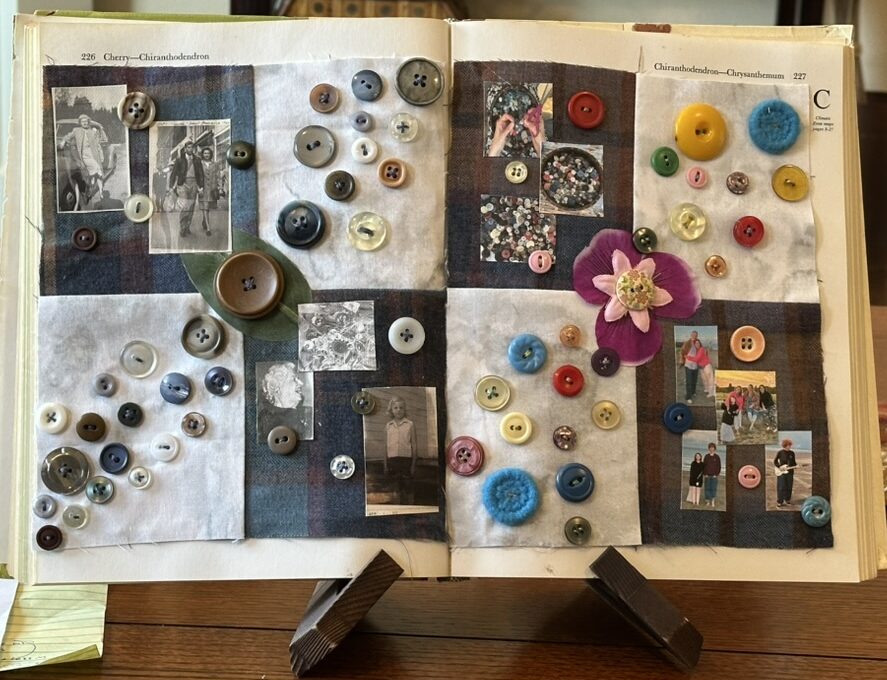
Death may end a life, but not necessarily a relationship.  Drawing on attachment-informed and Two-Track models of bereavement, we will begin by considering grieving as a process of reconstructing rather than relinquishing our bonds with those who have died, and the circumstances that can interfere with this natural process.  Clinical videos bearing on a range of losses will sensitize learners to various impediments to reorganizing the “back story” of the ongoing relationship with the deceased, as we also note several techniques that can help move such work forward.  Participants will practice a creative technique for mapping their “secure base” relationships and leave with a framework for conceptualizing attachment issues complicating adjustment to bereavement and a tool for assessing features of the “back story” of their experiences with the deceased that merit attention in grief counseling and therapy.
Note:  This 3-hour CE module focuses on application of psychological assessment and/or intervention methods that have overall consistent and credible empirical support in the contemporary peer reviewed scientific literature beyond those publications and other types of communications devoted primarily to the promotion of the approach.

LEARNING OBJECTIVES

  • Identify dimensions of insecure attachment that complicate adaptation to the death;
  • Summarize the Two-Track Model of bereavement and its use in identifying problems meriting clinical attention;
  • Utilize a validated measure of the quality of the relationship with the deceased to pinpoint a focus for intervention; and
  • Apply Secure Base Mapping to trace sustaining bonds over time to identify internal and external resources to promote adaptation to life transitions.

Earn 3 Continuing Education (CE) Credits

Portland Institute for Loss and Transition is approved by the American Psychological Association to sponsor continuing education for psychologists.  Portland Institute for Loss and Transition maintains responsibility for this program and its content.

Portland Institute for Loss and Transition, [Provider number 1954], is approved to offer social work continuing education by the Association of Social Work Boards (ASWB) Approved Continuing Education (ACE) program.  Organizations, not individual courses, are approved as ACE providers.  State and provincial regulatory boards have the final authority to determine whether an individual course may be accepted for continuing education credit.  Portland Institute for Loss and Transition maintains responsibility for this course.  ACE provider approval period: 09/09/2025-09/09/2028.

Earn 1 Credit toward
Level 1 Certification in Grief Therapy
offered by the Portland Institute.


PROGRAM SCHEDULE

This program contains the following video segments:

  • Attachment and Impermanence:  The Role of Internal Working Models (43 mins)
  • Caring and Daring:  Drawing the Secure Base Map (53 mins)
  • Object Stories:  Reaffirming the Continuing Bond (35 mins)
  • Working with the Relationship:  The Two-Track Model of Bereavement (32 mins)

Attachment-Informed Grief Therapy:
Recruiting Relational Resources

USD$99 for 3-hour module / USD$124 with CE Credits

GRIEF TRAINING FACULTY​

Robert A. Neimeyer, PhD

PhD
Portland, OR, United States

Robert A. Neimeyer, PhD, is a Professor Emeritus of the Department of Psychology, University of Memphis, and maintains an active consulting and coaching practice.  He also directs the Portland Institute for Loss and Transition (www.portlandinstitute.org), which provides online training internationally in grief therapy.  Neimeyer has published 33 books, including New Techniques of Grief Therapy:  Bereavement and Beyond, and serves as Editor of the journal Death Studies.  The author of over 500 articles and book chapters and a frequent workshop presenter, he is currently working to advance a more adequate theory of grieving as a meaning-making process.  Neimeyer served as President of the Association for Death Education and Counseling (ADEC) and Chair of the International Work Group for Death, Dying, & Bereavement.  In recognition of his scholarly contributions, he has been granted the Eminent Faculty Award by the University of Memphis, made a Fellow of the Clinical Psychology Division of the American Psychological Association, and given Lifetime Achievement Awards by both ADEC and the International Network on Personal Meaning.

Testimonials

We’re here to support you through your journey of understanding and growth.

If you have questions about Portland Institute or some of our offerings, please click the button below to visit our Frequently Asked Questions section – where many common questions are answered!