Trauma-Informed Grief Therapy:
Restorative Retelling

As contemporary models of bereavement have become more nuanced and empirically informed, so too have the practices available to counselors and therapists who work with complicated, prolonged and debilitating forms of grief.  This module offers in-depth training in several of these techniques, nesting them both within the therapy relationship and in the context of current theories and research that provide flexible, trauma-informed frameworks for intervention. 

Beginning with a discussion of the power of presence as a fundamental dimension of the therapeutic “holding environment,” we will consider how we can quickly assess our clients’ needs and readiness for change.  We will then discuss how to create a safe relational container for a healing “re-telling” of the loss experience, anchoring such work in both contemporary Meaning Reconstruction and Dual Process models and related research.  Drawing on clinical videos of clients contending with losses through sudden natural death, accident and suicide, we will learn to listen between the lines of the stories clients tell themselves and others about the death to grasp more fully the unvoiced meaning of their grief, and how we can help them integrate the event story of the death into lives with less reactivity, and find a compassionate audience for its telling.


Note:  This 3-hour CE module focuses on topics related to psychological practice, education, or research other than application of psychological assessment and/or intervention methods that are supported by contemporary scholarship grounded in established research procedures.

LEARNING OBJECTIVES

  • Describe the "Pyramid of Practice" and the role of Presence, Process and Procedure in the architecture of a session
  • Distinguish between therapeutic “presence” and “absence” in the process of therapy.
  • Summarize the essential features of Meaning Reconstruction and Dual Process models of grief and outline their implications for grief therapy.
  • Implement Restorative Retelling procedures for mastering the event story of the loss.
  • Summarize the use of audio recording of an event story of loss and its safe use between sessions to augment in-session work

Earn 3 Continuing Education (CE) Credits

Portland Institute for Loss and Transition is approved by the American Psychological Association to sponsor continuing education for psychologists.  Portland Institute for Loss and Transition maintains responsibility for this program and its content.

Portland Institute for Loss and Transition, [Provider number 1954], is approved to offer social work continuing education by the Association of Social Work Boards (ASWB) Approved Continuing Education (ACE) program.  Organizations, not individual courses, are approved as ACE providers.  State and provincial regulatory boards have the final authority to determine whether an individual course may be accepted for continuing education credit.  Portland Institute for Loss and Transition maintains responsibility for this course.  ACE provider approval period: 09/09/2025-09/09/2028.

Earn 1 Credit toward
Level 1 Certification in Grief Therapy
Offered by the Portland Institute.


PROGRAM SCHEDULE

This program contains the following video segments:

  • The Power of Presence: Constructing a Secure Base (49 mins)
  • Orienting to the Work: Fixation on the Event Story of Dying (45 mins)
  • Restorative Retelling: Principles and Procedures (53 mins)
  • Restorative Retelling: A Practice Session (50 mins)

Trauma-Informed Grief Therapy:
Restorative Retelling

USD$99 for 3-hour module / USD$124 with CE Credits

GRIEF TRAINING FACULTY​

Robert A. Neimeyer, PhD

PhD
Portland, OR, United States

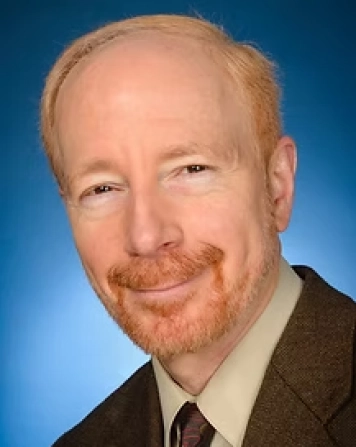
Robert A. Neimeyer, PhD, is a Professor Emeritus of the Department of Psychology, University of Memphis, and maintains an active consulting and coaching practice.  He also directs the Portland Institute for Loss and Transition (www.portlandinstitute.org), which provides online training internationally in grief therapy.  Neimeyer has published 33 books, including New Techniques of Grief Therapy:  Bereavement and Beyond, and serves as Editor of the journal Death Studies.  The author of over 500 articles and book chapters and a frequent workshop presenter, he is currently working to advance a more adequate theory of grieving as a meaning-making process.  Neimeyer served as President of the Association for Death Education and Counseling (ADEC) and Chair of the International Work Group for Death, Dying, & Bereavement.  In recognition of his scholarly contributions, he has been granted the Eminent Faculty Award by the University of Memphis, made a Fellow of the Clinical Psychology Division of the American Psychological Association, and given Lifetime Achievement Awards by both ADEC and the International Network on Personal Meaning.

Testimonials

We’re here to support you through your journey of understanding and growth.

If you have questions about Portland Institute or some of our offerings, please click the button below to visit our Frequently Asked Questions section – where many common questions are answered!