LIVE ONLINE TRAINING

Resonance and Resilience: Helping Bereaved Couples Cope with Traumatic Loss

October 9, 2026, 9am-12:30pm (PDT)

Presented By

Robert A. Neimeyer, PhD

Director, Portland Institute for Loss and Transition

Professor Emeritus, Department of Psychology, University of Memphis

Carolyn Ng, PsyD, MMSAC, RegCLR

Associate Director, Portland Institute for Loss and Transition


Viewed through the lens of meaning-focused grief therapy, adapting to life-altering losses or transitions of any kind entails reaffirming or reconstructing a world of meaning that has been shaken or shattered by traumatic events.  However, meaning arises between us as well as within us, particularly in the co-construction of the significance of the loss in couples mourning the death of a child, or accommodating other major non-death losses, as in diagnosis of serious illness, loss of a home, and other family crises.

This module offers a practical approach to working with grieving couples, in which an emotion-focused attention to affect regulation is joined with a constructivist focus on the processing of traumatic loss, and the ongoing revision of the identity of the family and its members.  Encompassing individual emotion modulation but also transcending it, we will discuss research on the relational window of tolerance for profound grief, and how couples strive to manage both their partners’ pain and their own during their interaction.

To illustrate these dynamics, we view clinical vignettes of couples navigating these co-regulatory processes, as well as the related concept of grief rhythms.  We will then introduce individual work in a couple context to convey how this structural intervention might advance this effort.  In addition, we will practice talking about talking to ensure safety in couples’ communication about addressing the traumatically charged topic of the death of their child or other family crises.


Note: This 3.5-hour CE module focuses on topics related to psychological practice, education, or research other than application of psychological assessment and/or intervention methods that are supported by contemporary scholarship grounded in established research procedures.

LEARNING OBJECTIVES

  • Describe the window of tolerance for negative affect and its relational counterpart, and their relevance for grief therapy with bereaved couples;
  • Define the concept of grief rhythms and illustrate it with a clinical example; and
  • Practice a protocol for Talking about Talking (and Listening) as a means of broaching deeper mutual understanding of the needs of self and other in navigating a potentially overwhelming shared grief.

Earn 3.5 Continuing Education (CE) Credits

Portland Institute for Loss and Transition is approved by the American Psychological Association to sponsor continuing education for psychologists.  Portland Institute for Loss and Transition maintains responsibility for this program and its content.

Portland Institute for Loss and Transition, [Provider number 1954], is approved to offer social work continuing education by the Association of Social Work Boards (ASWB) Approved Continuing Education (ACE) program.  Organizations, not individual courses, are approved as ACE providers.  State and provincial regulatory boards have the final authority to determine whether an individual course may be accepted for continuing education credit.  Portland Institute for Loss and Transition maintains responsibility for this course.  ACE provider approval period: 09/09/2024–09/09/2025.

PROGRAM SCHEDULE

This program contains the following segments:

  • The Relational Window of Tolerance:  Couple Dynamics in the Co-regulation of Grief (45 mins.)
  • Grief Rhythm:  Case Illustrations (30 min.)
  • Navigating the Sea of Grief:  Structural Interventions (45 min.) ​
  • Creating Safety:  Talking about Talking (45 min.)
  • Putting into Practice:  Application and Discussion (45 mins.)
 

TARGET AUDIENCE

  • Psychologists, social workers, counselors, art / music / expressive arts therapists, pastoral care personnel, healthcare professionals, bereavement volunteers
  • To qualify for the 3.5 CE Credits, please kindly note that:
    • Full attendance of the entire session is required to receive CE credits.  No partial credit is awarded.
    • You are required to complete a CE quiz after the session.  An overall score of 75% or higher within three attempts is required to obtain CE credits. The certificate of CE credits will then be issued to you.
    • For those who pursue ACE CEs, please note that you are also required to complete the CEs Evaluation (ACE).

INSTRUCTIONAL LEVEL

  • Intermediate

WEBINAR TIMING

  • October 9, 2026, 9am-12:30pm, PDT, Portland, OR, that corresponds to 12-3:30pm in Eastern Time, 5-8:30pm in Greenwich Mean Time and 6-9:30pm in Central European Time.
  • If your time zone is not listed, you may check the corresponding date and time using World Clock Meeting Planner.

Disclosure Statement

This live online training is not supported financially by a manufacturer of any commercial product and there is no sale of any product or publication during the live training session.  There is no known conflict of interest for this CE module or the presenting faculty.

GRIEF TRAINING FACULTY​

Robert A. Neimeyer

PhD
Portland, OR, United States

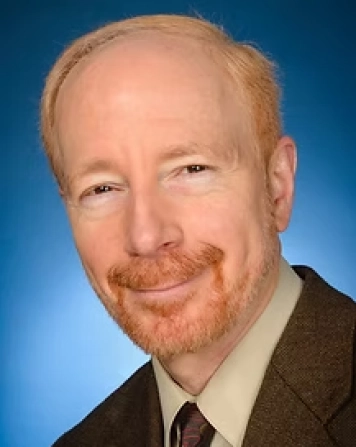
Robert A. Neimeyer, PhD, is Professor Emeritus of the Department of Psychology, University of Memphis, and maintains an active consulting and coaching practice. He also directs the Portland Institute for Loss and Transition, which provides online training internationally in grief therapy.  Neimeyer has published 37 books, including Living Beyond Loss:  Questions and Answers about Grief and Bereavement, New Techniques of Grief Therapy:  Bereavement and Beyond and The Handbook of Grief Therapies, and serves as Editor of the journal Death Studies. The author of over 600 articles and book chapters, he has been recognized in the Stanford University/Elsevier list of Top 2% Scientists in the world and the top .05% of all living scholars, according to Scholar GPS, with over 60,000 citations to his work according to Google Scholar. Neimeyer served as President of the Association for Death Education and Counseling (ADEC) and Chair of the International Work Group for Death, Dying, & Bereavement.  In recognition of his scholarly contributions, he has been granted the Eminent Faculty Award by the University of Memphis, made a Fellow of the Clinical Psychology Division of the American Psychological Association, and given Lifetime Achievement Awards by both ADEC and the International Network on Personal Meaning. Neimeyer is currently working to advance a more adequate theory of grieving as a meaning-making process.

Carolyn Ng

PsyD, MMSAC, RegCLR
Singapore / Portland, OR, United States

Carolyn Ng, PsyD, MMSAC, RegCLR, maintains a private practice, Anchorage for Loss and Transition, for training, supervision and therapy in Singapore, while also serving as an Associate Director of the Portland Institute.  Previously she served as Principal Counsellor with the Children’s Cancer Foundation in Singapore, specialising in cancer-related palliative care and bereavement counselling.  She is a registered counsellor, master clinical member and approved supervisor with the Singapore Association for Counselling (SAC).  She is a trained end-of-life doula and advanced care planning facilitator.  She is also trained in the Critical Incident Stress Management (CISM) by the International Critical Incident Stress Foundation, USA, community crisis response by the National Organisation for Victim Assistance (NOVA), USA, as well as Applied Suicide Intervention Skills Training (ASIST) by LivingWorks, Canada. Her recent writing concerns meaning-oriented narrative approach with individuals, couples and families in both pre- and post-loss contexts, with an emphasis on conversational and art-assisted approaches for fostering new meaning and action.

Find out more at: www.anchorage-for-loss.org.

USD$99 for 3-hour module / USD$124 with CE Credits

Testimonials

We’re here to support you through your journey of understanding and growth.

If you have questions about Portland Institute or some of our offerings, please click the button below to visit our Frequently Asked Questions section – where many common questions are answered!